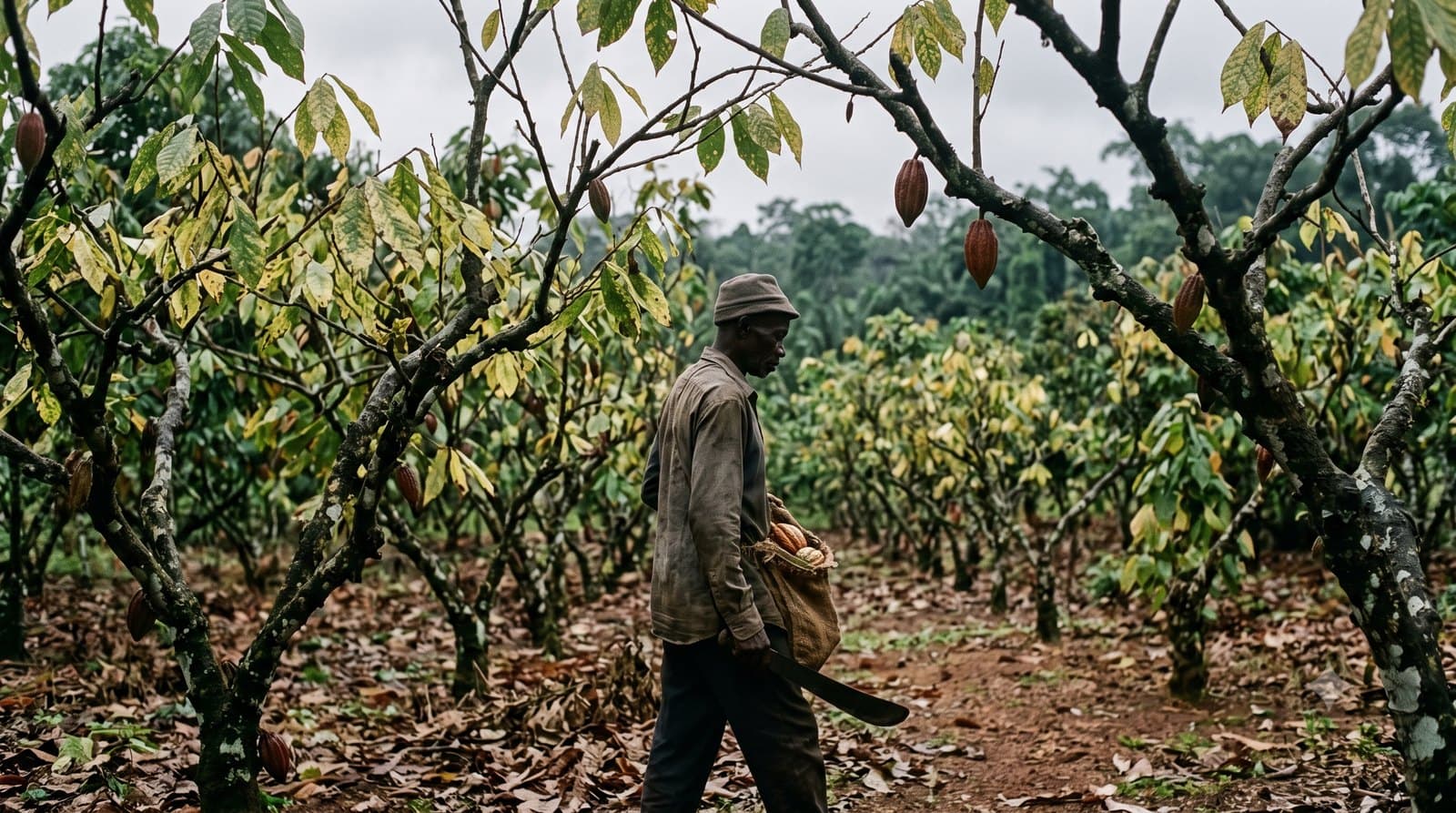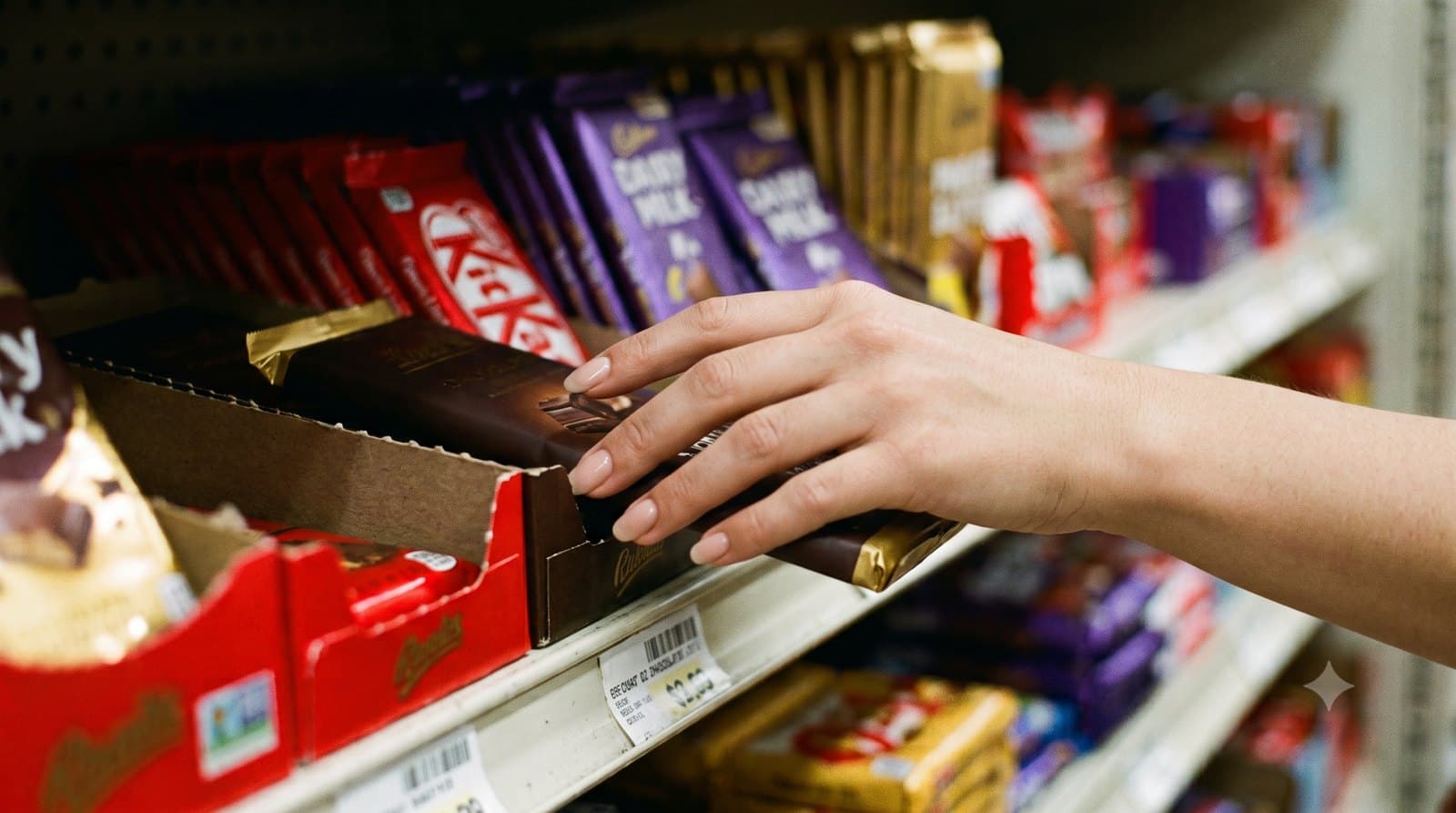
Here is a paradox every shopper has noticed and few explanations do justice: cocoa has fallen hard — from its 2024 record near $12,900 a tonne to around $4,900 in mid-2026 — and yet the chocolate bar on the shelf costs the same, or more. If the key ingredient is so much cheaper, why isn't the chocolate? The short answer is that a retail price is not a live readout of a commodity. It is a lagging, sticky, margin-managed output sitting at the end of a long chain of hedges, contracts and pricing decisions. Understanding that chain is the difference between being surprised by your grocery bill and being able to see where it is going.
#Cocoa is a smaller slice of the bar than you think
Start with a fact that reframes the whole question: cocoa is only one input in the stack. By the time a bar reaches the shelf, roughly 6.6% of its retail price reaches farmers, according to industry breakdowns — about six cents on a one-dollar bar. Zoom out to the factory and raw materials of all kinds account for around 68.6% of a milk-chocolate bar's manufacturing cost, with the remaining ~31.4% in labour, energy, overhead and margin. Sugar, dairy, nuts, packaging, freight, energy, marketing and retail markup all sit alongside cocoa in that stack. So when cocoa tripled, it did not triple the bar — and now that cocoa has halved, it does not halve the bar either. A big move in one minority input becomes a modest move in the total.
#The hedge book is why today's bar is priced off yesterday's cocoa
The single most misunderstood mechanism is timing. Large manufacturers buy, hedge, process and package cocoa months before the finished product is sold. The Easter egg on the shelf in spring 2026 was priced off cocoa positions locked in during 2025, when the market was still in crisis. Hedging smooths volatility in both directions — and that symmetry is the catch. When cocoa rises, hedging delays the pain; when cocoa falls, hedging delays the benefit. Buyers who cheered "cocoa is down" in 2026 are still eating 2025's cost base.
The industry's own numbers make this concrete. Barry Callebaut, the world's largest bulk chocolate maker, runs a "cost-plus" model that passes raw-material, energy and freight costs to customers — its revenue surged roughly 49% as it relayed the cocoa spike downstream. But even it saw hedging costs rise about 60%, because insuring against a violently volatile cocoa price is itself expensive. Those costs, too, end up in the bar.
#Rockets and feathers: prices rise fast and fall slow
Then there is pricing psychology, and it is not an accident. Consumer prices tend to go up like a rocket and down like a feather — a well-documented asymmetry. After absorbing a historic input shock, manufacturers and retailers are in no hurry to give price back; the first thing a falling cocoa price does is repair the margins that the spike compressed, not lower the shelf tag. Cheaper cocoa in 2026 is, in effect, being banked as recovered profitability before any of it reaches the checkout. Add limited pass-through power — supermarkets and brands negotiate hard over who keeps the saving — and the "feather" drifts down slowly.
#Shrinkflation: the price rise you don't see
Where brands can't hold the headline price, they often hold it literally while shrinking the product. Same price, smaller bar — a higher cost per gram without a visible increase. Shrinkflation is the industry's release valve when shoppers resist overt hikes, and it is just as sticky on the way down: a bar that quietly lost 10% of its weight during the crisis rarely regains it when cocoa falls.
#So when does chocolate actually get cheaper?
Relief requires several things to line up: hedged positions taken at high prices have to roll off, cocoa has to stay down rather than spike again, and competition — private label especially — has to force the saving through to the shelf. Most analysts do not expect meaningful retail relief before late 2026 at the earliest, aligned with the new Ivory Coast and Ghana harvests, and even that assumes El Niño and West African supply risks don't reignite the price. When relief does come, expect some of it to arrive as pack sizes quietly growing back rather than as lower prices.
#The takeaway for anyone who buys or sells chocolate
The lesson generalises well beyond the confectionery aisle: a retail price is a lagging, managed variable, not a live index. If you want to anticipate where chocolate prices go — as a buyer, a competitor, or an investor — watch the futures curve, the hedge books and the full cost stack, not the shelf. The shelf is telling you what cocoa cost a year ago; the machinery is telling you what it will cost next year.
Cookiedogs turns the machinery behind the shelf price — futures, hedging, input costs and supplier signals — into a forward view procurement and finance teams can act on. Seeing the lag before it lands is the whole point.
Informational market and pricing analysis, not trading, investment or financial advice.