The most important number in cocoa right now is not a price — it is a date. From 30 December 2026, the EU Deforestation Regulation (EUDR) applies to large and medium operators placing cocoa on the EU market, with micro and small operators following on 30 June 2027. After a run of postponements, the December 2025 amendment (Regulation (EU) 2025/2650) reset the clock one last time, and the European Commission's 4 May 2026 simplification package confirmed it will not reopen the text. The "will it slip again?" era is over. For anyone sourcing cocoa into Europe, the runway is now measured in months — and the market is already splitting in two.
#What the rule actually demands
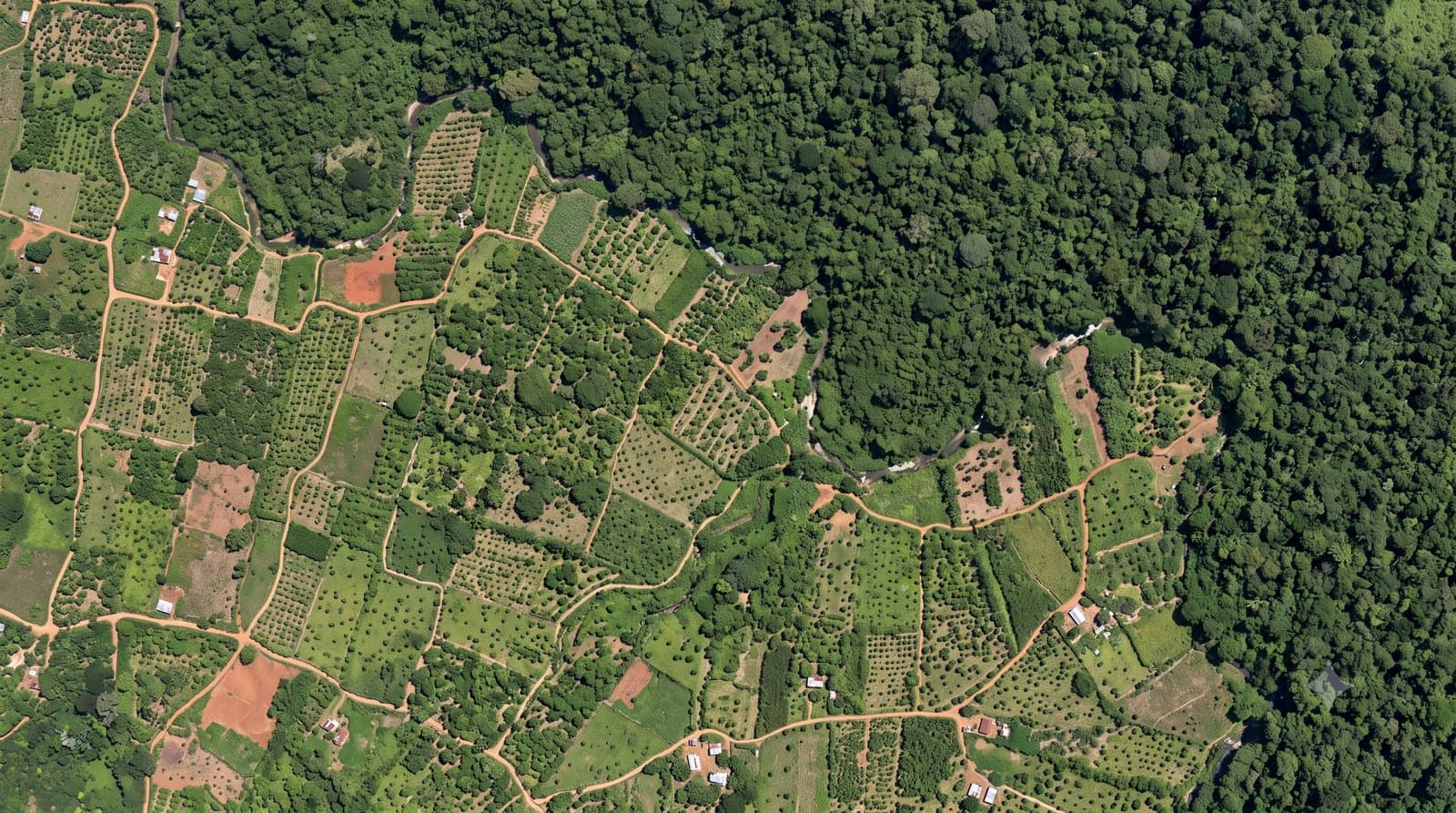
EUDR is not another ESG questionnaire. It is a market-access gate. To place cocoa on the EU market, an operator must trace every batch back to the exact geolocation of the plot of land it was grown on, prove that plot was not deforested after 31 December 2020, run a risk assessment, mitigate where risk is non-negligible, and file an electronic due diligence statement in the EU's Information System — then keep it all auditable. A country-benchmarking system (low / standard / high risk) sets how heavy the due-diligence burden is per origin. No geolocation, no legal entry. That is a categorical shift from the voluntary, certificate-based traceability the industry has leaned on for a decade.
#Why cocoa is the hardest commodity to comply
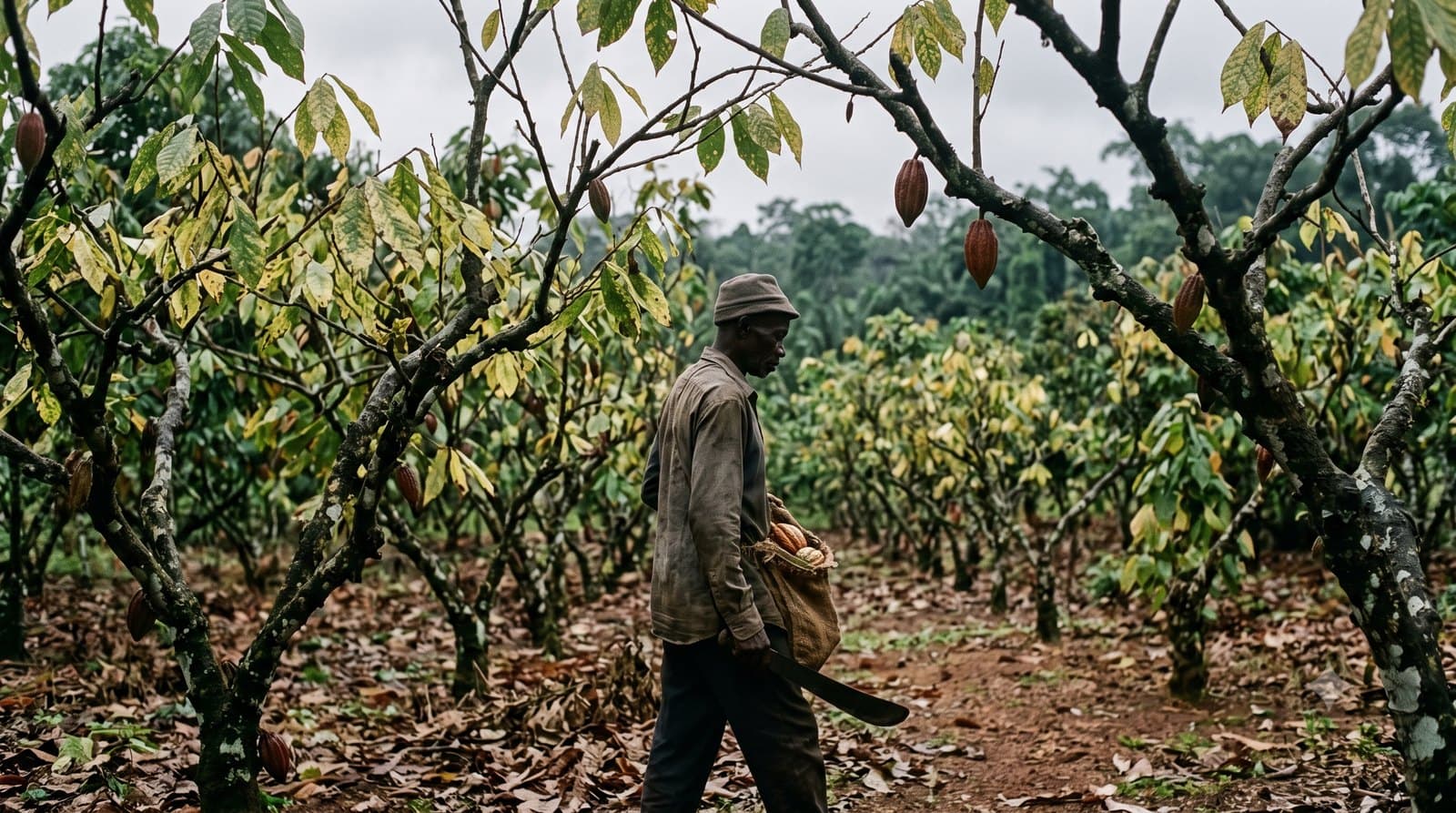
Of all seven EUDR commodities, cocoa may be the most exposed. More than 60% of world supply comes from Ivory Coast and Ghana, grown by an estimated two million smallholders on plots that are often only a few hectares, frequently undocumented in any formal land registry, and historically aggregated and mixed as they move through cooperatives and traders. EUDR requires the opposite of mixing: it requires knowing the specific plots. Geolocating millions of farms — and then keeping compliant beans physically separated from non-compliant ones through fermentation, drying, bulking and shipping — is a supply-chain re-engineering project, not a paperwork exercise. Mass-balance accounting, the industry's usual shortcut, does not satisfy plot-level traceability.
#A single commodity, two markets
The practical result is that cocoa is bifurcating. On one side sits EUDR-eligible, plot-traceable, deforestation-free cocoa — a structurally scarcer, premium sub-market. On the other sits everything that cannot yet be verified, which will increasingly divert toward the United States and Asia, where the rule does not apply. Even in a year of abundant total supply — and, as we have written, 2026 is exactly that — the compliant pool stays tight. The compliant curve and the exchange curve are diverging, and a buyer who models only the flat ICE price is pricing the wrong market.
#The operating picture for procurement
The response is not to wait for clarity; the clarity has arrived. Concretely:
- Map your base to the plot, not the cooperative. Collect farm polygons or GPS points for every source, and treat any tier of your supply you cannot geolocate as at-risk volume.
- Stand up due-diligence capability now — risk assessment, mitigation, and DDS filing — and rewrite supplier contracts to require geolocation and no-deforestation attestations as a condition of purchase.
- Decide your segregation model early. Physically separating compliant beans has cost and logistics consequences that need designing before December, not after.
- Treat smallholder inclusion as a supply-continuity risk, not just an ethics line. Farmers who cannot be verified get cut out — shrinking your compliant base and creating reputational exposure at the same time.
The second-order effects are where the strategy lives. Verification costs will pass through into landed cost. A two-tier global price is emerging, with a durable premium on compliant origin. And there is a real competitive dividend: the manufacturers that treated origin data as a cost center are now scrambling to reconstruct supply chains they never mapped, while those that built plot-level supply-chain intelligence early can source, prove and ship compliant cocoa while rivals cannot. In a market where traceability is now the gate, the data is the moat.
Cookiedogs fuses supplier, contract, plot-geolocation and regulatory signals into one operating picture — so cocoa buyers walk into the EUDR deadline with a mapped, provable, compliant supply base rather than a scramble. That's the terrain we live in.
Informational only — a market and supply-chain briefing, not legal or compliance advice. Confirm obligations against the current EUDR text and your own counsel.