When cocoa prices nearly trebled through 2024 to an all-time high near $12,900 a tonne, most coverage reached for the easy explanation: bad weather. It was not wrong, but it mistook the trigger for the cause. The truth is more uncomfortable for anyone who buys cocoa: the world's supply base had been quietly hollowing out for a decade, and 2024 was simply the year the bill came due. Understanding why is the difference between treating cocoa as a market that will "normalise" and treating it as a structurally fragile system that will keep producing shocks. For procurement, that distinction is everything.
#A disease with no cure
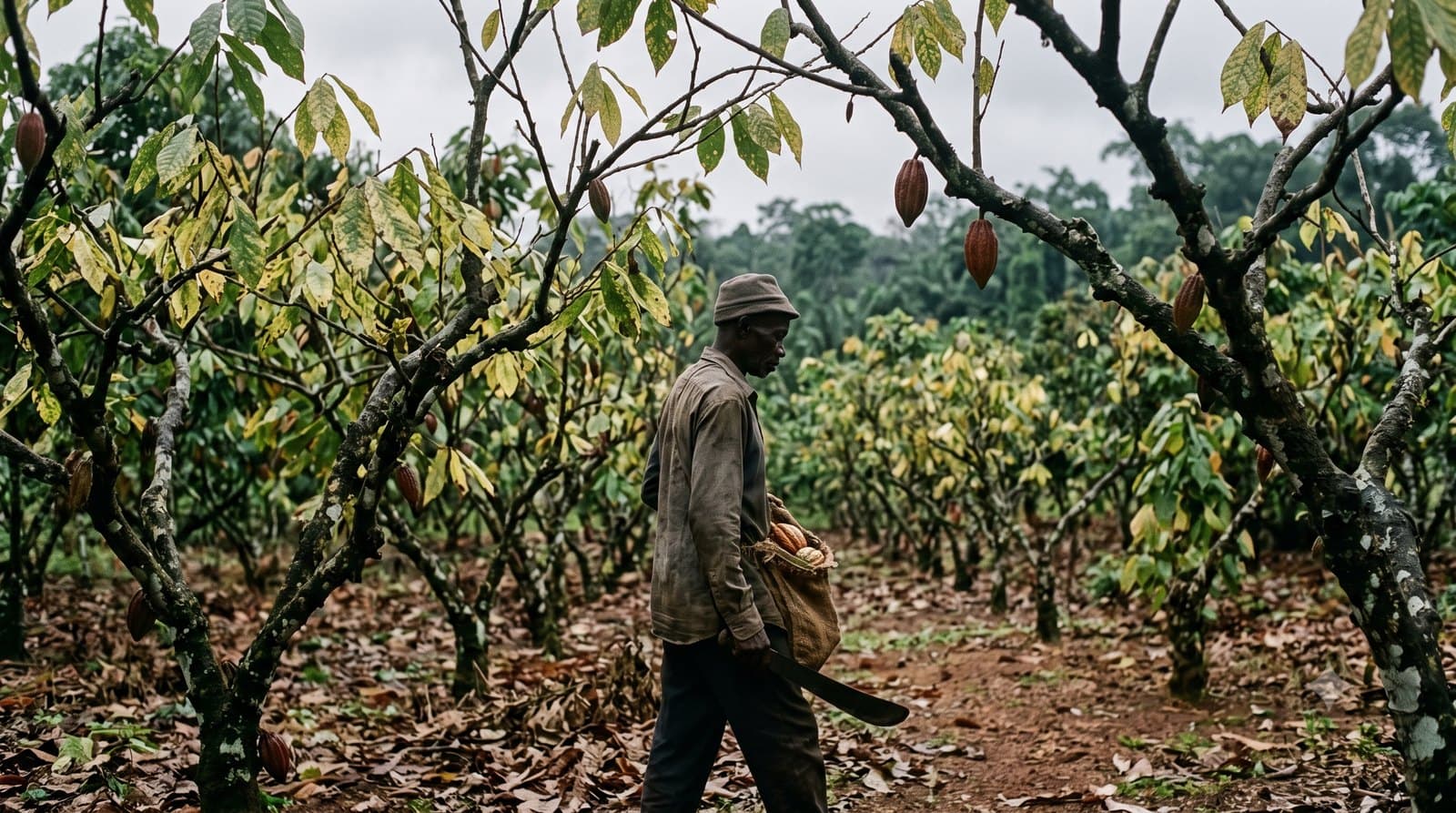
Start with the pathogen the market underestimated for years. Cacao swollen shoot virus disease (CSSVD), spread by mealybugs, has no cure — an infected tree can only be cut out and replaced. According to Enveritas, the disease cuts yields by roughly 35%, and puts an estimated 15% of Ivory Coast's supply at risk given the number of infected farms. In Ghana the picture is starker still: the last nationwide survey, in 2023, found 31% of cocoa-growing land infected, up from 17% in 2017 — a near-doubling in six years. The industry has finally moved: a regional workshop in Abidjan in April 2026 adopted a five-year roadmap (2026–2031) to roll the disease back across Côte d'Ivoire and Ghana. But cutting and replanting is a multi-year sacrifice of income, and a new tree takes three to five years to bear. The disease front is not a one-season problem; it is a decade-long one.
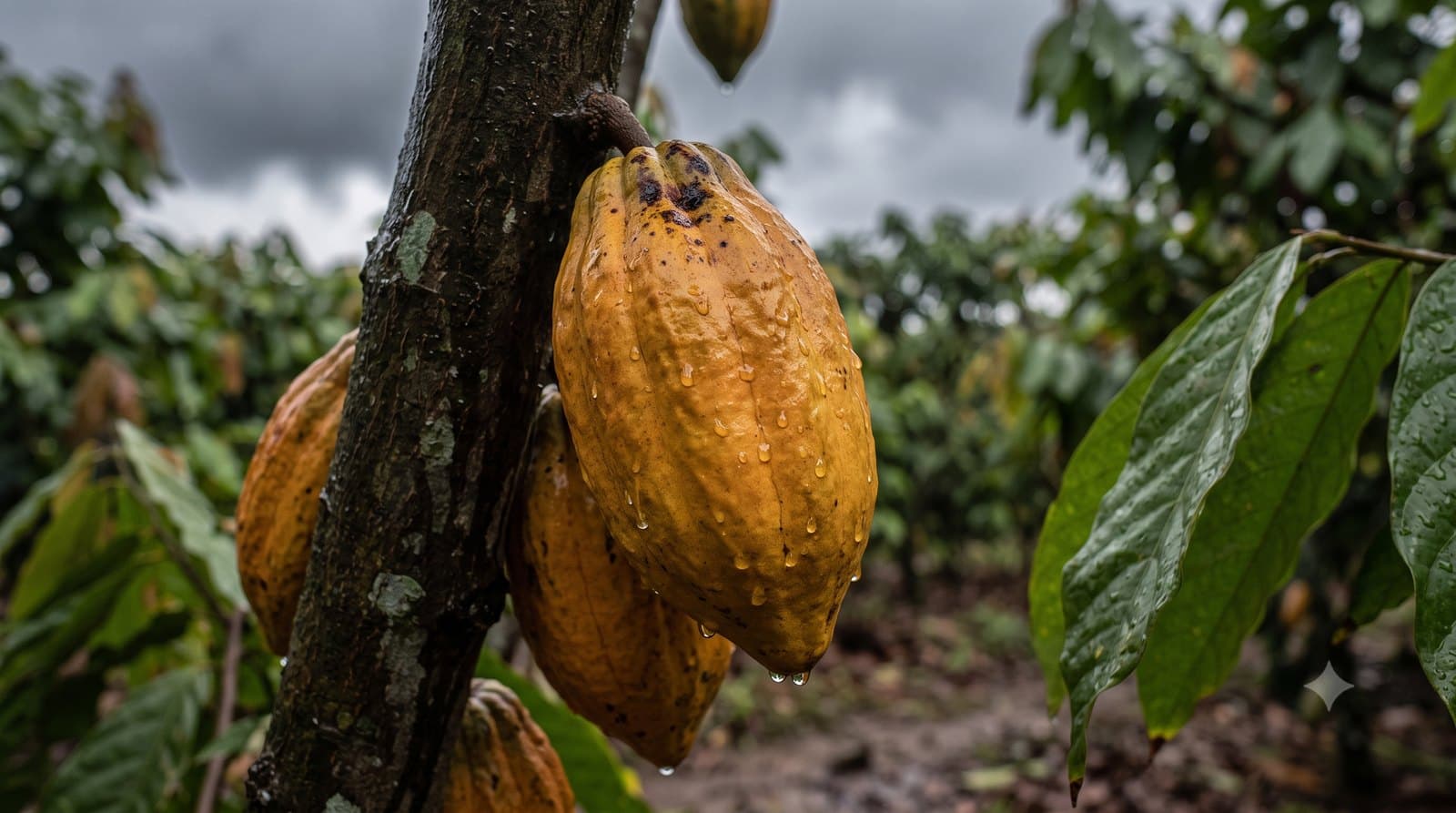
Layer black pod disease — a Phytophthora fungus that thrives in exactly the wet conditions West Africa has been seeing — on top of CSSVD, and the biological pressure on the crop is relentless and compounding.
#Old trees, thin margins
Disease lands on a supply base that was already tired. Much of West Africa's cocoa grows on aging, low-yielding trees planted decades ago, on farms with minimal fertiliser, pruning or replanting. The reason is economic, and it is the real root of the crisis: for most of the last decade, farmgate prices were too low to justify reinvestment. A farmer earning a poverty income does not replant — they harvest what they can from what they have, and the orchard degrades year by year. Multiply that across roughly two million smallholders and you get a slow-motion decline in yield potential that no single good harvest can reverse.
This is why farmer economics sit at the centre of the story. Côte d'Ivoire and Ghana fix farmgate prices through their marketing boards and forward-sell the crop, which insulates farmers from spikes but also from the full benefit of them. When prices trebled, Ivory Coast raised its 2025/26 main-crop farmgate to 2,800 CFA/kg — a 56% jump — only to cut the mid-crop price by 57% to 1,200 CFA/kg (about $2.13) as the futures market rolled over. Ghana set its season price around 58,000 cedis a tonne. Yet Fairtrade's April 2026 Living Income Reference Prices — the level needed for a decent standard of living — sit at $2.68/kg for Ghana and €2.65/kg for Côte d'Ivoire, with the Ivorian reference price running 47% above the actual farmgate. The $400-a-tonne Living Income Differential introduced in 2020/21 has been eroded in practice. The gap between what farmers are paid and what they need to reinvest is precisely the gap that keeps the trees old and the disease spreading.
#Climate as a threat multiplier
Weather is the accelerant, not the arsonist. Erratic rainfall, El Niño-driven heat, and dry harmattan winds stress trees that are already old and diseased, turning a difficult year into a failed one. The deeper concern is structural: climate models have long warned that rising temperatures will shrink the land area suitable for cocoa in West Africa over the coming decades. Cocoa is a fussy crop — narrow bands of temperature, rainfall and humidity — grown in one of the regions most exposed to climate stress. That is not a 2024 problem; it is a 2040 problem already visible in the noise.
#A recovery that is thinner than it looks
Here is where buyers must read carefully. The market has swung from crisis to apparent calm: the ICCO put the 2023/24 season in a 489,000-tonne deficit, then estimated the 2024/25 season back in surplus — though by its May 2026 bulletin that surplus had been revised down to just 48,000 tonnes, on production of about 4.72 million tonnes. A surplus that thin is a rounding error, not a resolution. And it was bought partly through demand destruction, not just supply recovery: global grindings fell from roughly 4.81 million tonnes in 2023/24 to 4.60 million in 2024/25 as record prices and squeezed margins pushed manufacturers to reformulate and cut volumes.
High prices have, encouragingly, pulled some reinvestment back into farms — better inputs, some replanting. But the payoff is years away, the disease is still spreading faster than it is being cut back, and EUDR (from December 2026) now adds a compliance filter that further tightens the usable supply. The recovery is real but shallow, and it rests on the same fragile foundations that produced the shock.
#Why this matters for procurement
The lesson is not "cocoa is expensive." It is that cocoa is a structurally fragile system, where disease, tree age, farmer poverty and climate interact — so volatility is the base case, not the exception. A buyer who tracks only the futures price is watching the smoke; the fire is at origin, in infection rates, replanting cycles, farmgate economics and rainfall anomalies. The firms that will source cocoa well through the next decade are the ones building an origin-level intelligence picture now — reading the supply base structurally, months before it shows up on the screen.
Cookiedogs exists to turn exactly these origin signals — disease pressure, farmgate economics, weather, traceability and regulation — into an operating picture procurement teams can act on before volatility reaches the invoice. Cocoa is where that edge matters most.
Informational market and supply-chain analysis, not trading, investment or legal advice.